Booked but Didn't Show: 6 Ways to Reduce No-Shows in Group Classes
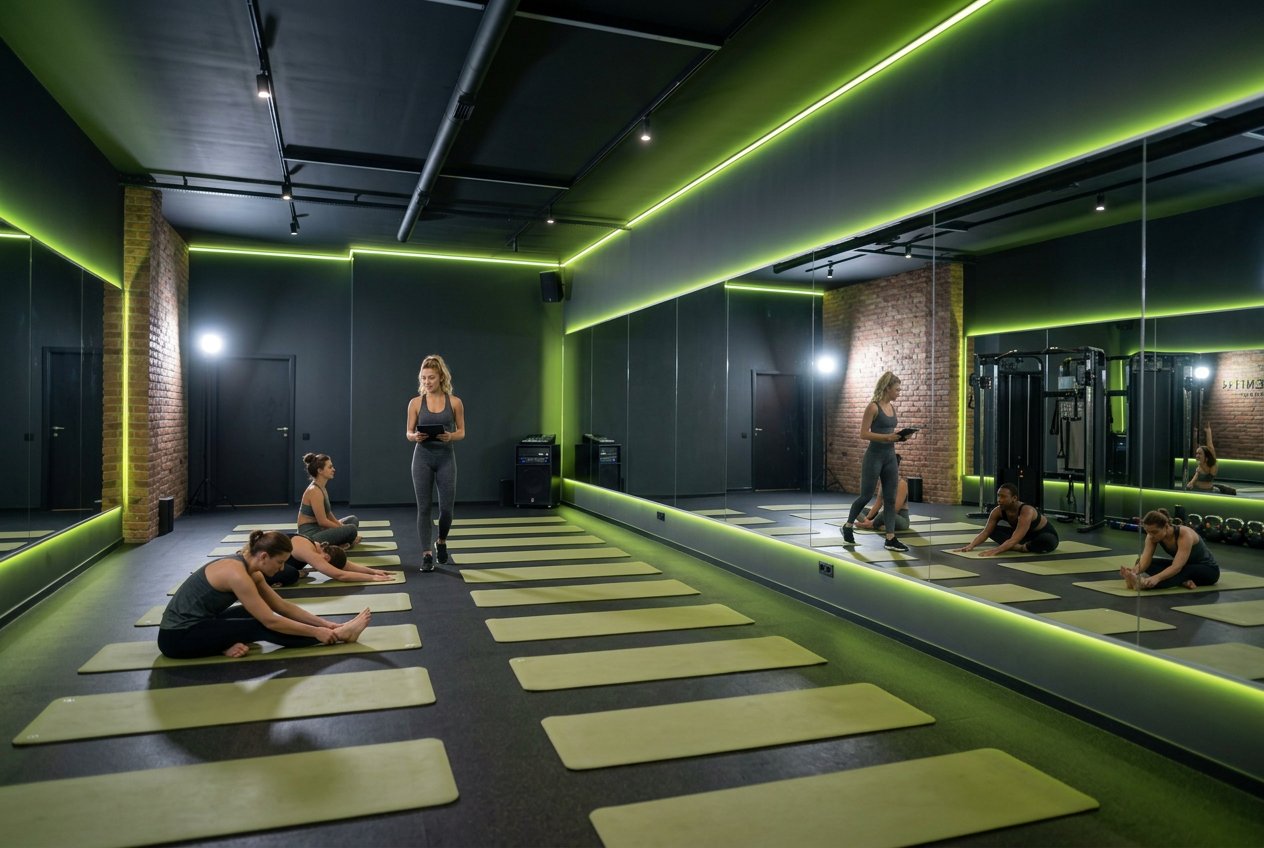
Sunday evening, Monday's schedule looks perfect: 12 people booked and three more on the waitlist. Monday, 6 p.m. — there are seven people on the mats. The other five simply didn't show up. No message, no call.
If you run group classes, this scenario is painfully familiar. No-shows are one of the most annoying and most underestimated problems in the fitness business. They look like a minor inconvenience, but they actually cost you real money every month. The good news: most of them can be prevented. In this article, you'll see why people don't show up, 6 concrete ways to reduce no-shows, and a ready-made policy template you can send to your clients today.
How much does one empty spot really cost you?
Let's run the numbers with an example. Say that:
- a group class costs 15 €;
- on average, 3 booked people don't show up to a class;
- you teach 12 classes a month.
3 × 15 € × 12 = 540 € a month. That's money you could have earned from the people on the waitlist — they wanted to come, but the spot was “taken.” Add to that the energy of a class where half the mats are empty, and a coach who prepared a session for 12 but is teaching seven.
Why don't people show up?
Most people who don't show up aren't “bad clients.” The reasons are almost always the same:
- They forget. They booked on Friday, and the class is on Wednesday.
- They book “just in case.” They hold a spot without being sure they'll be able to make it.
- Cancelling is awkward. They'd have to message the coach, apologize, explain — and in the end, they don't write anything.
- There are no consequences. If a no-show costs nothing, there's no reason for it not to happen.
Each of these reasons has a concrete solution.
6 ways to reduce no-shows
1. Automatic reminders before class
The simplest and most effective fix for forgetfulness. A single reminder the day before class puts it back on the client's mind in time — while they can still cancel if their plans have changed.
The key is for reminders to be automatic. If you have to send them manually on WhatsApp to 40 people, you'll give up after the second week. In Click and Fit, you can turn on SMS reminders that clients receive automatically the day before class — for everyone, or only for new clients, who usually carry the highest no-show risk.
2. Make cancelling easy (really easy)
It sounds counterintuitive, but it's true: the easier it is to cancel, the fewer no-shows you have. People who “disappear” without warning usually aren't irresponsible — they just feel awkward writing to you.
When cancelling is one click in their profile, with no explanations and no awkward messages, people cancel in time. You get notified right away, and the free spot goes back into the calendar while there's still someone to fill it.
3. Set a clear cancellation deadline
One clear rule — for example, “Cancel no later than 2 hours before class starts” — gives structure to both you and your clients. Click and Fit shows this reminder to clients when they cancel, and late cancellations stay visible to the instructor, so you know who cancels at the last minute.
What happens after the deadline is up to you: the visit can be deducted from the class pass or charged. Don't worry about losing clients over this — a policy like this is standard at serious studios, and good clients respect it. The only thing you'll lose is some people's habit of “holding” a spot they don't use.
4. A waitlist that runs itself
The waitlist is the cancellation deadline's best friend. When a class is full, clients can join the waitlist. The moment someone cancels, everyone on the list gets notified, and the first one to respond takes the spot.
If your waitlist is a note in a notebook, it almost never works in time. By the time you see the cancellation, message the next person and they reply — class has already started. An automatic waitlist fills the spot without a single message from you.
5. Prepaid class passes
People value what they've already paid for. A client with an 8-class pass is far more motivated to show up (or cancel in time) than someone who'll “pay at the door.”
A bonus for you: prepaid passes also improve your cash flow — you know part of your monthly revenue in advance. In Click and Fit, you can create different types of class passes, and clients can use them directly when booking a class.
6. Track who doesn't show up — and talk to them
No-shows are usually concentrated among a handful of people. When you mark attendance with a quick check-in (“Present” / “No-show”), the system keeps a history for each client, and in your statistics you can see the no-show rate month by month.
Don't jump straight to penalties. Talk to the person first — sometimes the schedule just doesn't suit them, and they'd be better off moving to a different time slot. If that doesn't help, the rules from point 3 do the rest. And if you want extra control, you can require manual booking approval for new clients only — that way your regulars book instantly, while you review the newcomers.
How to introduce rules without upsetting your clients
Coaches' most common fear is: “If I introduce rules, my clients will be offended.” In practice, the opposite happens — if you do it right:
- Explain why. The rules aren't against your clients — they're for them, so there's room for everyone who wants to train.
- Announce them in advance. Give 1–2 weeks' notice before they take effect.
- Be consistent. A rule you only enforce sometimes isn't a rule.
- Be human. Illness or an emergency is an exception, and clients appreciate it when you understand that.
Ready-made template: booking and cancellation policy
Copy the text, adjust it to your studio and send it to your clients:
Hi there! 👋
Starting [date], we're introducing a few simple rules so there's room for everyone who wants to train:
✅ Class bookings are made online via [link to your profile].
⏰ Please cancel no later than 2 hours before class starts — with one click from your profile.
📋 If the class is full, join the waitlist — you'll be notified if a spot opens up.
⚠️ Late cancellations and no-shows will be deducted from your class pass.
Thank you for your understanding — this way, everyone who wants to train gets their spot! 💪
Frequently asked questions
What no-show rate is “normal”? It depends on the type of classes and your clients, so the best benchmark is your own statistics. Measure your current rate, introduce the rules from this article and compare after a month.
Won't reminders annoy my clients? A short reminder the day before class is seen as a service, not an intrusion. Most clients appreciate it because it helps them not miss a class they've already booked.
Should I charge for a no-show the very first time? Not necessarily. Many studios start with a warning for the first no-show and apply the rule from then on. What matters is that the rule is clearly announced in advance and applied equally to everyone.
Conclusion: change the system, not your clients
No-shows aren't fate. In most cases, they're the result of a system that relies on people's memory and goodwill. Change the system, and no-shows go down:
- reminders — so they don't forget;
- easy cancellation — so they tell you in time;
- a clear cancellation deadline — so there are rules;
- a waitlist — so no spot stays empty;
- class passes — so there's commitment;
- tracking — so you spot problems early.
Almost none of this requires extra work from you if you have the right tool. Click and Fit handles reminders, cancellations and the waitlist for you, and setup takes about 8 minutes — see how, step by step, in the guide to your first booking. And if you're still wondering whether it's time to ditch the notebook, read the 7 signs it's time to digitize your business. The first month is free, with no commitment.